Monument of Lysicrates
Athens 105 58, Greece

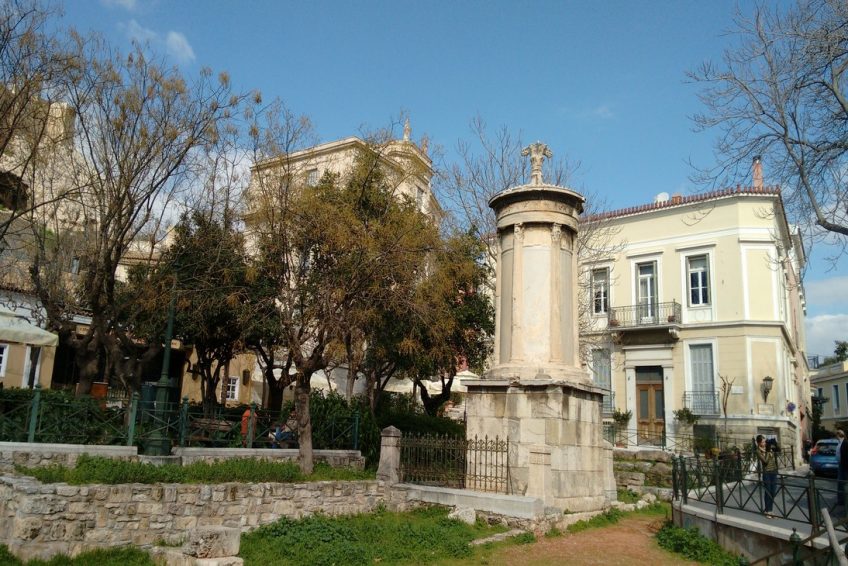

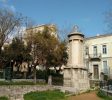
Choregic monument erected on the west side of the Street of the Tripods, by Lysikrates, in 335/34 B.C., according to an inscription preserved on the architrave. The circular building rests on a square podium of poros stone (2,93 m. long on each side), and consists of six Corinthian columns of Pentelic marble alternating with panels of Hymettian marble. The columns are among the earliest examples of the use of the Corinthian order in Athens. The monument is decorated with a frieze depicting scenes from the life of Dionysos. The upper surface of the monolithic roof was ornamented with carved leaves that ended at an acanthus-shaped base which supported the choregic tripod, not preserved today. The monument, known also as the “Lantern of Diogenes”, was incorporated in the Capucin monastery in 1669, and was used by the monks as a reading-room and library. The monks opened an entrance by removing one of the panels on the northwest side. The monastery was destroyed during the Greek Revolution in 1821.
Reference: http://odysseus.culture.gr
Choregic monument erected on the west side of the Street of the Tripods, by Lysikrates, in 335/34 B.C., according to an inscription preserved on the architrave. The circular building rests on a square podium of poros stone (2,93 m. long on each side), and consists of six Corinthian columns of Pentelic marble alternating with panels of Hymettian marble. The columns are among the earliest examples of the use of the Corinthian order in Athens. The monument is decorated with a frieze depicting scenes from the life of Dionysos. The upper surface of the monolithic roof was ornamented with carved leaves that ended at an acanthus-shaped base which supported the choregic tripod, not preserved today. The monument, known also as the “Lantern of Diogenes”, was incorporated in the Capucin monastery in 1669, and was used by the monks as a reading-room and library. The monks opened an entrance by removing one of the panels on the northwest side. The monastery was destroyed during the Greek Revolution in 1821.
Reference: http://odysseus.culture.gr
 Fachidis JewelleryPatriarchou Ioakim 20, Athina 106 ...
 MusesAdrianou 13, Athina 105 55, Greece
 Fish PointArchimidous 8, Athina 116 35, Gree...
 GPK S.A. Foreign ExchangeAgiou Konstantinou 6, Athina 104 3...
 MelikriniAsklipiou 14, Athina 106 80, Greec...
 Ella Greek CookingMitropoleos 26, Athina 105 63, Gre...
 Barley CargoKolokotroni 6, Athina 105 61, Gree...
 Ayurveda HellasNikis 28, Athina 105 57, Greece
 HeliaiaAdrianou 13, Athina 105 55, Greece
 Elena’s Day SpaLikavittou 10, Athina 106 71, Gree...